Sierra Chart's Teton Routing, paired with the Denali data feed, is designed for traders who need ultra-fast execution. Here's why it matters:
- Low Latency: Teton Routing achieves round-trip speeds as low as 250–500 microseconds when using co-located servers near CME Group's data centers.
- Direct Access: By eliminating intermediaries, Teton ensures faster order processing and reduced delays.
- Real-Time Data: The Denali feed delivers market data directly from exchanges, ensuring you have the latest information for decision-making.
- Optimized Design: Built in C++, Sierra Chart minimizes processing overhead for faster performance.
- Server Co-location: Hosting servers near exchange data centers further reduces latency to under 1 millisecond.
For traders in fast-moving markets like CME Group futures, these features provide a measurable edge by reducing slippage and improving execution speed. Configurations like enabling server-managed orders and using high-performance servers can further fine-tune your setup.
Key Takeaway: Combining Sierra Chart, Teton Routing, and Denali data feed creates a trading environment engineered for speed, reliability, and precision.
Sierra Chart Architecture and Data Flow
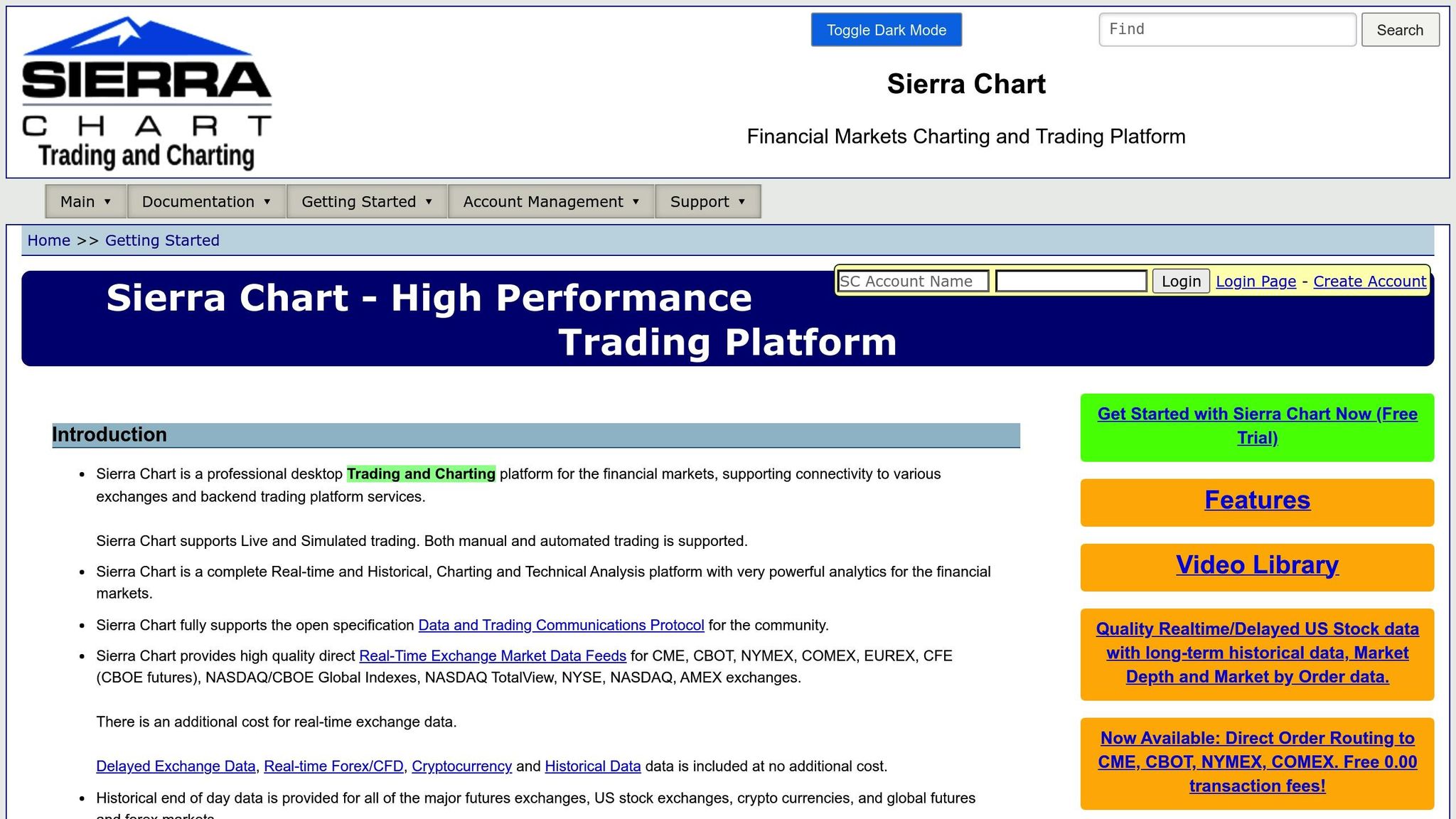
Sierra Chart's High-Speed Design
Sierra Chart is crafted in C++, a programming language known for its efficiency and speed. This design choice minimizes processing overhead, allowing the platform to handle orders and process data swiftly - an essential feature for markets where microseconds can make all the difference.
How Teton Order Routing and Denali Data Feed Work
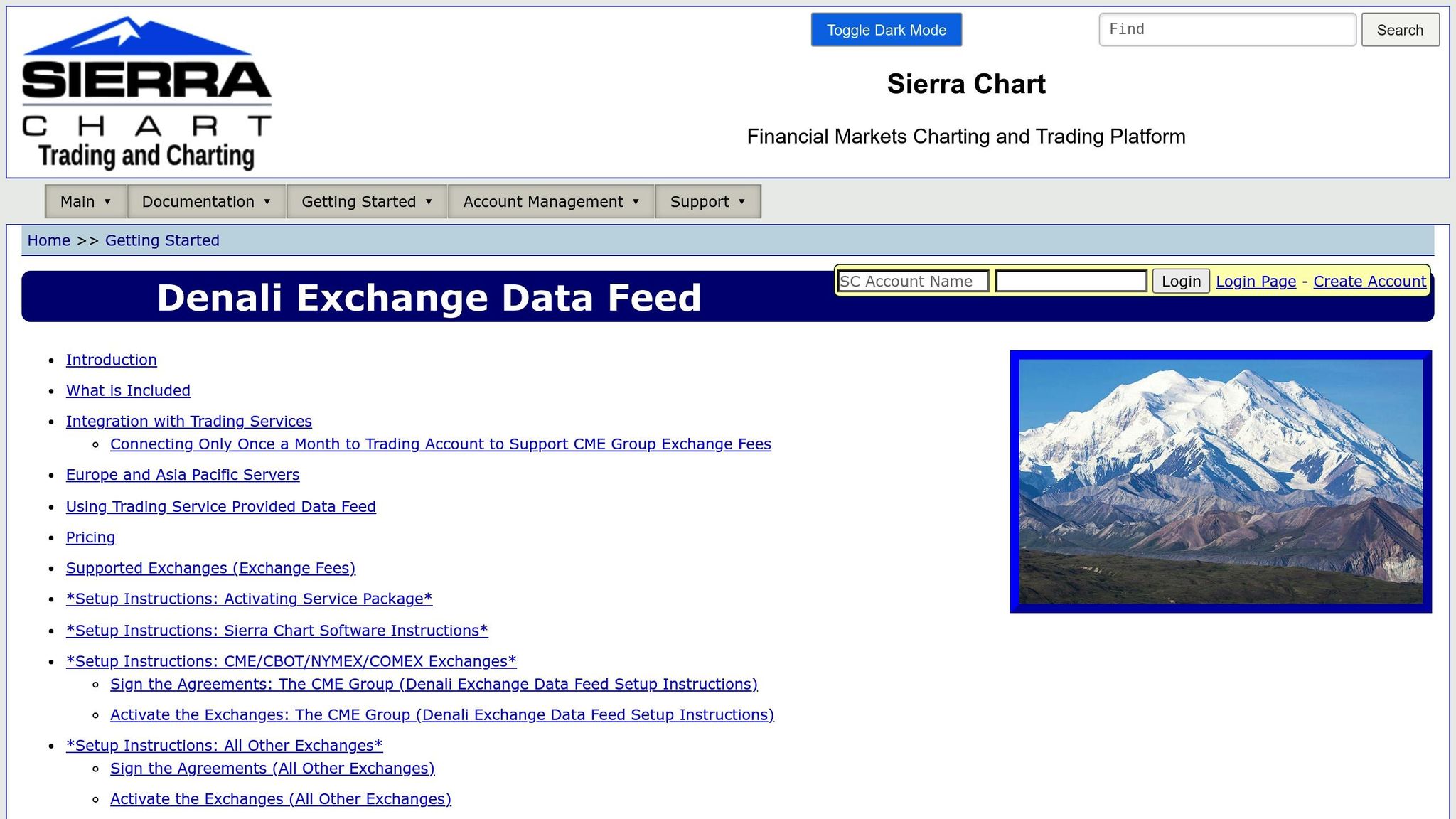
The Teton Order Routing system cuts out intermediaries by providing direct access to exchanges. This streamlined approach achieves round-trip speeds as fast as 250 microseconds. Its integration ensures seamless synchronization of order processing, risk management, and data transmission.
On the data side, the Denali Data Feed offers real-time market data directly to Sierra Chart. Unlike third-party data feeds, Denali avoids extra latency, ensuring traders receive the most up-to-date price information. This combination of Teton and Denali creates a unified system that not only speeds up data and trading processes but also reduces the number of connection points, lowering the risk of potential failures. Additionally, physical proximity to exchanges enhances performance even further.
Server Co-location and Latency Reduction
To push performance to the next level, server co-location is utilized. By hosting servers in Aurora, Illinois - close to major exchange data centers - latency can be reduced to under 1 millisecond. Studies suggest that such setups significantly improve order execution and risk management, making them particularly valuable for high-frequency trading strategies.
For those with latency-sensitive strategies, investing in a dedicated low-latency server is a smart move. These servers, which cost around $1,500 to $2,000 per month, are optimized for performance. They run in performance mode and are equipped with specialized hardware and software configurations to ensure the fastest possible connections. Sierra Chart connects to these servers via LAN, requiring precise hosting arrangements to maintain peak efficiency.
Latency Benchmarks and Performance Data
Teton Routing Latency Measurements
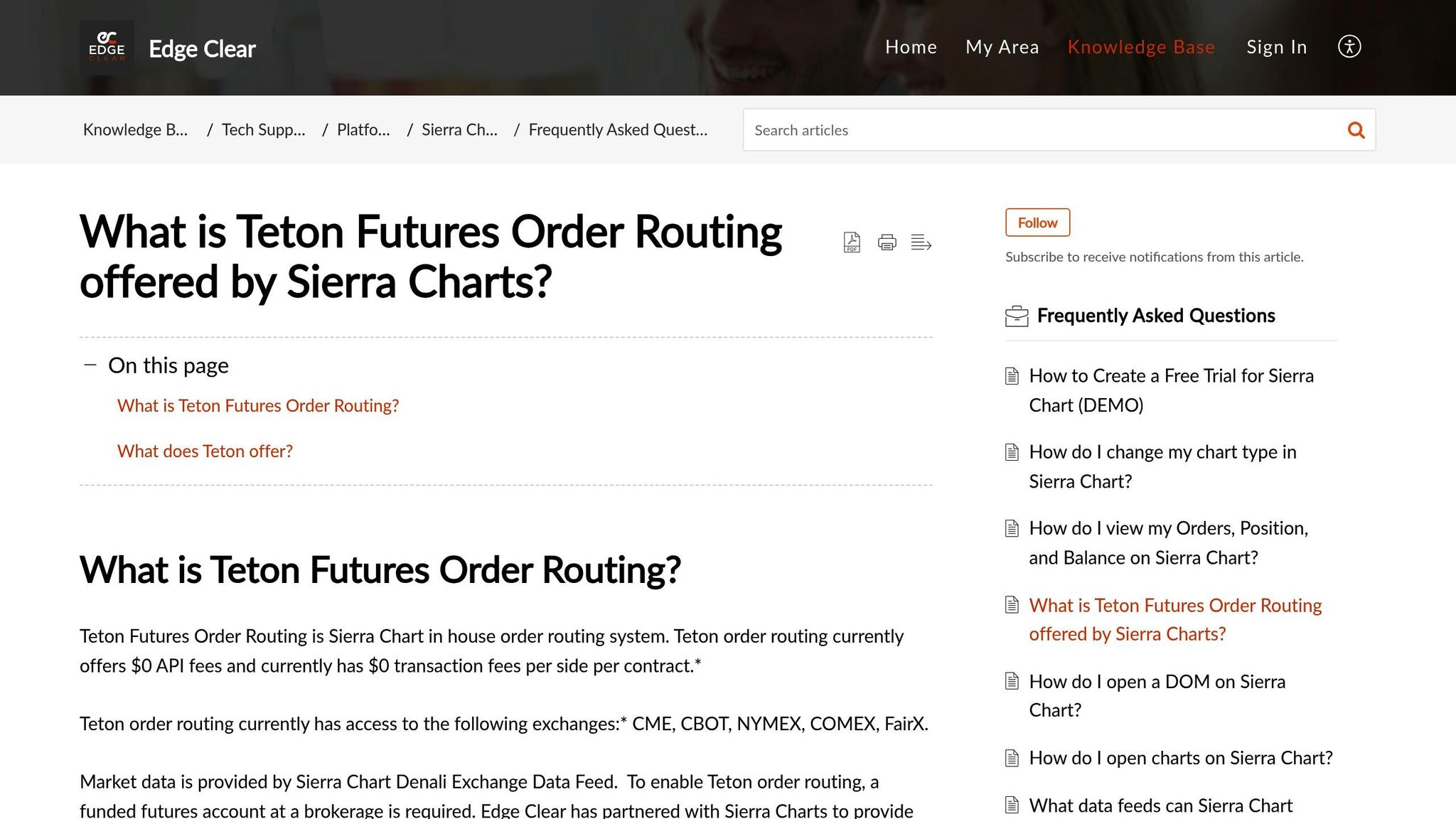
Teton Order Routing demonstrates impressive round-trip speeds of 250–500 µs under ideal conditions, with optimizations bringing it down to 250 µs. These figures are based on high-performance, co-located servers operating in performance mode and do not account for network delays. The latency is measured directly from the order routing software process on the server, meaning real-world results will also depend on network overhead and operating system processing.
In practical scenarios, order confirmation times average around 15 ms. This figure includes network and system overhead, marking a notable improvement over many competing platforms.
Teton/Denali vs Other Data Feeds Performance
Benchmarks and comparisons highlight the consistent performance edge of Teton/Denali over other data feeds. Here's a summary of key metrics:
| Data Feed | Order Routing Latency | User Experience |
|---|---|---|
| Teton | 500 µs (250 µs optimized) | Fast, reliable, and cost-effective |
| TT/Denali | Slower than Teton | Good, but slower fill reporting |
| CQG | Comparable to Teton | Reliable and consistent |
| Rithmic | Comparable to Teton | Good, but not as fast as Teton |
Market data latencies across all feeds remain above 50 ms.
Users transitioning from TT or CQG to Teton Routing frequently report faster order fills, quicker account balance updates, and an overall boost in trading efficiency.
User Reports on Configuration Improvements
Adjustments like allocating more CPU resources and using direct LAN IP connections have been shown to further reduce latency. Additionally, optimizing chart settings - such as tweaking price display formats and adjusting tick sizes - can enhance system responsiveness.
Software updates have also played a key role. For instance, updates in 2023 reduced latency to 250 µs. One example from that year showed a user switching from TT/Denali to Teton Routing and experiencing a drop in order confirmation times from 20 ms to 15 ms, along with faster fill reporting and more immediate account balance updates. However, external factors like internet quality, network congestion, and busy market periods can still impact latency beyond these benchmarks. These improvements align with broader efforts to minimize latency and maximize performance.
Sierra Chart Performance Optimization Guide
sbb-itb-a92d0a3
Latency Optimization Best Practices
To achieve the lowest latency with Sierra Chart and Teton Routing, paying close attention to configuration, hardware setup, and regular maintenance is key. Even minor delays can make a significant difference - ultra-fast order execution can occur in just 250 microseconds, while slower setups may take several milliseconds.
Sierra Chart Settings Configuration
Fine-tuning Sierra Chart settings can significantly reduce latency. Start by enabling hardware acceleration and OpenGL, while disabling non-essential chart overlays. Reducing the number of active chart instances helps conserve both processing power and memory. Within the Global Settings menu, prioritize speed over visual effects to streamline performance.
For Teton Routing, ensure that server-managed OCO and bracket orders are enabled. These server-side processes reduce potential delays. Additionally, confirm that the Price Display Format and Tick Size settings in Chart Settings align with those used for order entry. Mismatched settings can cause conversion delays.
Direct Server Connection Setup
Using server co-location is one of the most effective ways to minimize latency. Connecting directly to US-based servers co-located with Teton routing servers eliminates unnecessary network hops. This setup typically requires a high-performance dedicated server equipped with fast CPUs, low-latency network cards, and SSD storage. Hosting providers specializing in low-latency solutions are ideal for this purpose.
For optimal performance, configure the operating system by disabling unnecessary background processes. Establish direct LAN IP connections between Sierra Chart and Teton servers. Coordinating with Sierra Chart support and your hosting provider ensures that connectivity is optimized.
Software Updates for Latency Improvements
Keeping software up to date is essential for reducing latency. Recent Sierra Chart updates have cut order routing times from around 500 microseconds to as low as 250 microseconds. These updates not only include latency-reducing features but also improve file management and bandwidth efficiency. Additionally, updating drivers and network interface software helps prevent compatibility issues.
Some users have reported that disconnecting and reconnecting after loading chartbooks can clear transient connection issues, ensuring smoother data downloads during trading sessions. Combining these updates with real-time market data integration further enhances performance.
Integrating Real-Time Commodity Price APIs
Once your system and hardware are optimized, integrating real-time price APIs can provide an edge in data-driven decision-making. Pairing low-latency execution with real-time data feeds offers traders timely insights. For those analyzing commodity prices, APIs like OilpriceAPI deliver real-time and historical price data for assets like Brent Crude, WTI, Natural Gas, and Gold. This integration enables quick adjustments during volatile market conditions, ensuring that traders remain well-informed and ready to act.
Adding Real-Time Commodity Price APIs to Sierra Chart
In the fast-paced world of low-latency trading, combining direct market access with real-time commodity data can sharpen your strategy. While Sierra Chart with Teton Routing is built for ultra-low latency execution, traders often need access to additional commodity price data that standard futures feeds don’t provide. Real-time commodity price APIs can bridge this gap, offering up-to-date insights into key energy and precious metals markets. This integration is especially useful when your strategy depends on spot prices or when tracking correlations between futures and cash markets. With this extra layer of data, traders can make more informed decisions.
OilpriceAPI Features and Capabilities
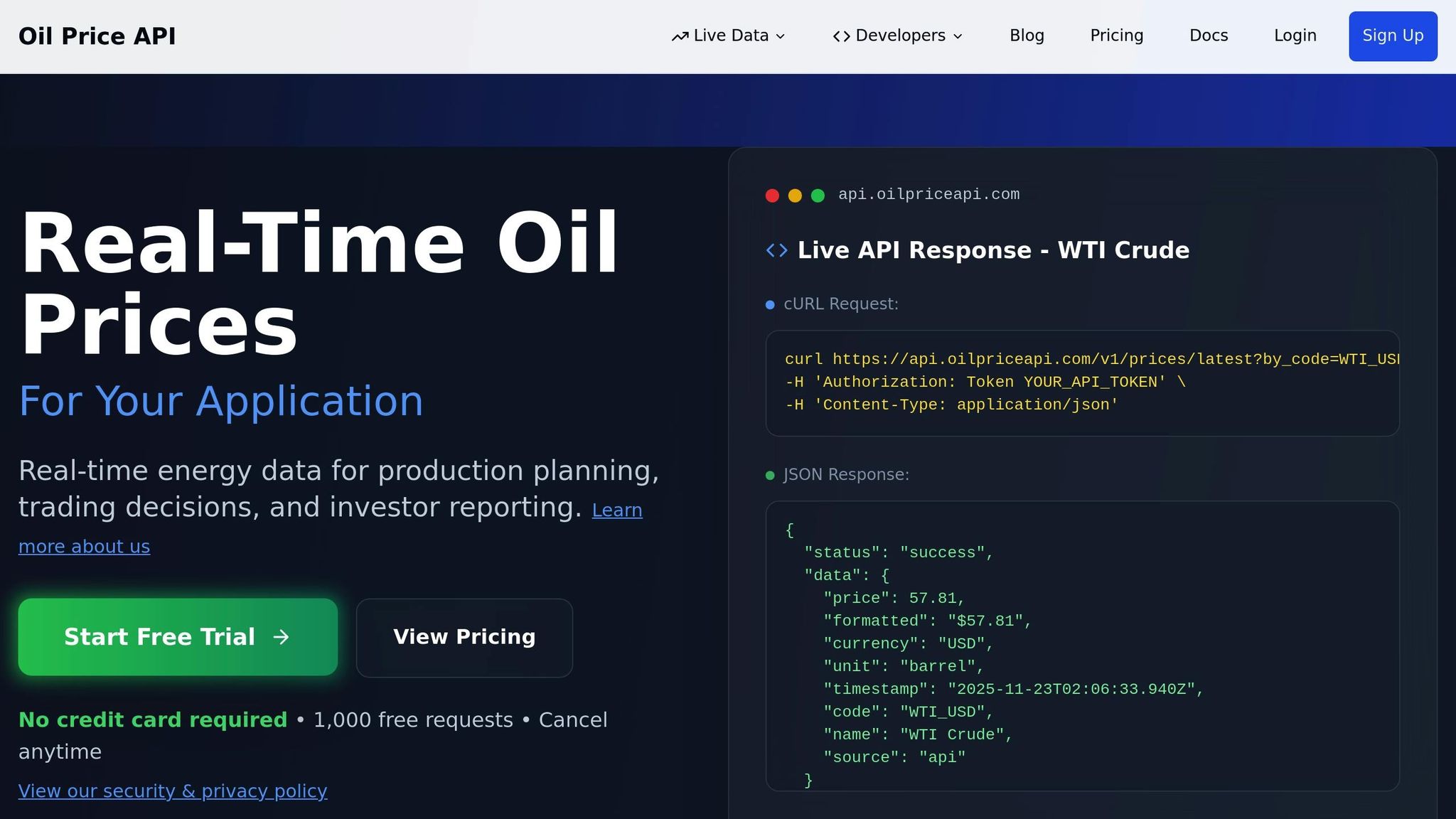
OilpriceAPI provides both real-time and historical pricing data for major commodities like Brent Crude, WTI, Natural Gas, and Gold through a JSON REST API. Data updates every 5 minutes, with an average response time of 50ms and 99.9% uptime, ensuring consistent access to critical market information.
The API includes fields such as current price, formatted currency, timestamps, and commodity codes. For more advanced needs, it offers professional-grade data like the ICE Brent Futures API, which includes 96 consecutive contract months and real-time spreads. Trusted by over 83 companies globally, it’s a reliable resource for commodity data.
Pricing options are straightforward:
- A free trial with 1,000 requests
- An entry plan at $15/month
- A premium plan at $129/month, offering 250,000 monthly requests and priority support
Adding OilpriceAPI to Sierra Chart Workflows
Integrating OilpriceAPI into Sierra Chart involves setting up HTTP GET requests to fetch commodity data and incorporating it into your trading workflows. During account setup, you’ll be provided with a unique API token needed for authentication.
The primary endpoint for current prices is https://api.oilpriceapi.com/v1/prices/latest. To request specific commodity data, use the by_code parameter. For instance, to fetch WTI Crude prices, the endpoint would be:
https://api.oilpriceapi.com/v1/prices/latest?by_code=WTI_USD.
Include your API token in the Authorization header (Authorization: Token YOUR_API_TOKEN) and set the Content-Type to application/json.
To integrate this data into Sierra Chart, use custom scripts or external programs to periodically call the API and map the returned data to Sierra Chart’s structures. Be mindful of API rate limits to ensure smooth performance, and always test your setup in a simulated environment before going live. To maintain accuracy, cross-check API data with Sierra Chart’s native feeds to identify any discrepancies.
Real-Time Data Impact on Low-Latency Strategies
Incorporating real-time commodity data into your trading setup opens up new opportunities but also requires careful consideration. With a 5-minute refresh rate and 50ms average response time, OilpriceAPI provides valuable market insights, though it operates on a different timescale than Sierra Chart’s sub-millisecond execution.
This means the data is better suited for strategic decision-making rather than real-time execution triggers. Traders can use it to monitor market conditions, adjust position sizes based on commodity price trends, or implement risk management strategies like stop-loss orders or hedging. It’s particularly helpful for spread trading, arbitrage, or hedging, where understanding broader price relationships is critical.
The API also supports automated alerts and conditional orders based on price changes, speeding up decision-making even if the data refreshes less frequently than Sierra Chart’s execution capabilities. For those trading energy and precious metals, having access to spot prices alongside futures data offers a fuller market perspective.
However, it’s crucial to recognize that external API calls introduce some network latency compared to Sierra Chart’s direct exchange connections. The overhead from HTTP requests means this data is best used to supplement, not replace, the ultra-low latency feeds provided by Sierra Chart and Teton Routing. By using commodity APIs for broader market context and relying on Sierra Chart for time-sensitive execution, you can enhance your strategy without sacrificing the speed advantage Sierra Chart delivers.
Conclusion: Best Latency Performance with Sierra Chart and Teton Routing
Achieving fast trading execution with Sierra Chart and Teton Routing hinges on the right combination of hardware, server placement, and continuous fine-tuning. Research highlights the clear edge this setup offers, with Teton routing achieving speeds as low as 250 microseconds, far outperforming many competing systems with higher latencies.
Key Latency Reduction Strategies
Co-locating dedicated servers near exchanges ensures consistent sub-millisecond order routing speeds, a critical factor in competitive trading environments.
Hardware and network setup lay the groundwork for low-latency performance. Using high-performance servers, direct LAN IP connections, and streamlined operating system settings can significantly enhance execution speeds. These adjustments work in tandem to cut down on network hops and processing delays, ensuring faster order fills.
Regular software updates are equally important for keeping systems at peak performance. Updates improve bandwidth efficiency, refine file management, and further reduce latency. These efforts align with Sierra Chart's goal of delivering unmatched execution speeds for traders.
The integration of Teton routing with the Denali data feed simplifies system architecture. Users switching from platforms like TT or CQG benefit from smoother balance updates and increased reliability. While market data latency generally hovers around 50 milliseconds under normal conditions, the **order routing speed advantage - nearly six times faster than TT routing - ** provides a significant edge.
Optimizing chart configurations can also enhance performance. Adjusting price formatting, tick size settings, and enabling server-side order management ensures precise order pricing and efficient execution without unnecessary processing delays.
Looking Ahead: Future Improvements and Research
Building on these latency reduction techniques, Sierra Chart has its sights set on further advancements. Upcoming improvements include enhanced server co-location options and ongoing software refinements. Research into advanced networking protocols and direct connection technologies aims to push order routing speeds even lower.
Efforts to reduce market data latency are also a priority. While order routing has reached sub-millisecond speeds, market data delivery still operates at a 50-millisecond baseline during normal conditions. Future upgrades may close this gap through better data delivery methods and improved exchange connectivity.
The platform is also expanding integration capabilities with external data sources. For example, incorporating APIs like OilpriceAPI allows traders to combine ultra-fast execution with broader market insights. Future updates aim to streamline these integrations while preserving the core speed advantages of Sierra Chart and Teton routing.
Finally, the zero-cost model for Teton order routing opens the door for more traders to access institutional-grade execution speeds. Combined with continuous technical advancements, this approach signals a future where low-latency trading becomes more accessible than ever.
FAQs
How does server co-location improve the performance of Sierra Chart with Teton Order Routing?
Server co-location plays a key role in boosting the performance of Sierra Chart when paired with Teton Order Routing. By positioning servers close to the exchange, the communication between your trading platform and the exchange becomes much faster. This means orders are executed more quickly, and market data updates arrive with greater speed and precision.
This setup is particularly advantageous for traders who depend on real-time data to make split-second decisions. With reduced delays, server co-location enhances trading efficiency and provides a crucial edge in markets where every second counts.
How can I configure Sierra Chart to minimize latency when using Teton Order Routing?
To get the best performance and reduce latency in Sierra Chart with Teton Order Routing, start with a reliable, high-speed internet connection. Make sure your data feed is set up properly - many users recommend the Denali Data Feed for its speed and dependability. Running Sierra Chart on a high-performance computer can also make a big difference, especially if you limit other resource-heavy applications running in the background. For those comfortable with advanced settings, tweaking the chart update interval and enabling optimized order routing options can help further improve efficiency.
How does using real-time commodity price APIs enhance the low-latency trading experience with Sierra Chart and Teton Order Routing?
Integrating real-time commodity price APIs with Sierra Chart and Teton Order Routing can greatly improve the trading experience by delivering accurate and up-to-the-minute market data. This gives traders access to precise pricing for key commodities like Brent Crude, WTI, Natural Gas, and Gold - critical for making well-informed decisions in a fast-moving market.
When you pair the low-latency capabilities of Sierra Chart and Teton Order Routing with real-time data, it allows traders to execute strategies more efficiently and react to market shifts almost instantly. This combination enhances trade execution and supports better performance, especially in high-frequency trading scenarios.